*This post contains affiliate links, which means I will make a commission at no extra cost to you should you click through and make a purchase.
Sent! Check your inbox.
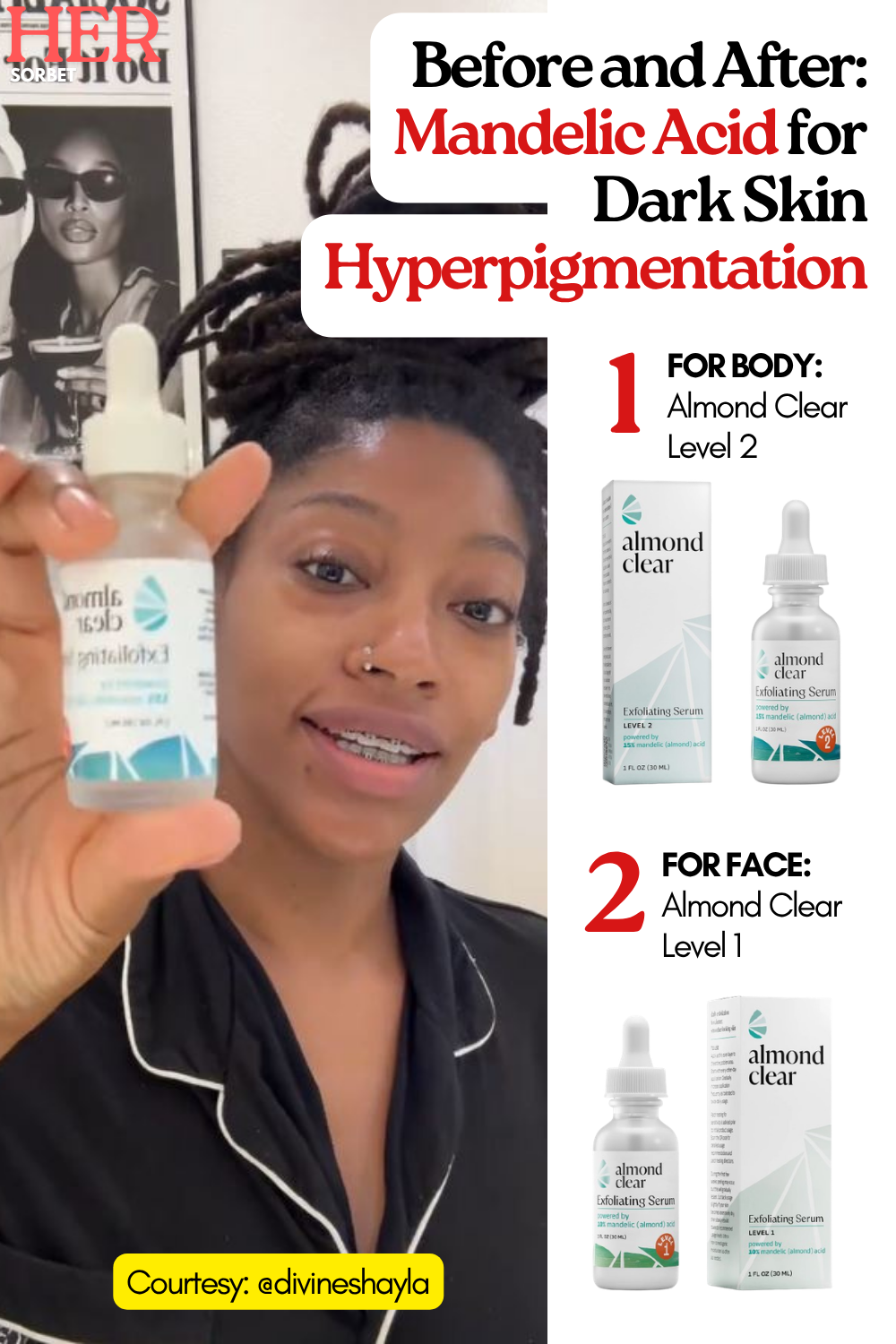
Divine Shayla walked into a spa in Orlando, Florida on a Groupon for a dermaplanning session to help with the hyperpigmentation on her jawline, even wanting a chemical peel.
However, the aesthetician gave her an ingredient recommendation that has since cleared her jawline hyperpigmentation, her bikini area, her underarms, and kept her coming back for more.
The aesthetician knew that there was a less invasive treatment that she could do at home. And she didn’t get paid for that.”
The ingredient the aesthetician recommended? Mandelic acid. And if you have melanated skin and hyperpigmentation anywhere on your body, this article is for you.
“She was the first person to put into my mind, a professional, that mandelic acid is perfect for us.”
@Divine Shayla
Why Mandelic Acid Is Especially Right for Melanated Skin
The aesthetician’s recommendation was not random.
There is a specific scientific reason why mandelic acid is particularly well suited to darker, melanin-rich skin tones, and it comes down to the way the molecule is built.
“For melanated skin, mandelic acid and azelaic acid are the two acids that really help to target hyperpigmentation without taking pigment away from your skin,” she recounts her aesthetician telling her.
“Like we have to be careful when we’re trying to brighten it.”
That nuance, brightening without stripping, treating without triggering, is exactly what mandelic acid delivers.
You May Also Like: This 4-Step Routine Is the Secret to a Smoother, Brighter Coochie Area
The Products She Used, and How
1. The Face Formula

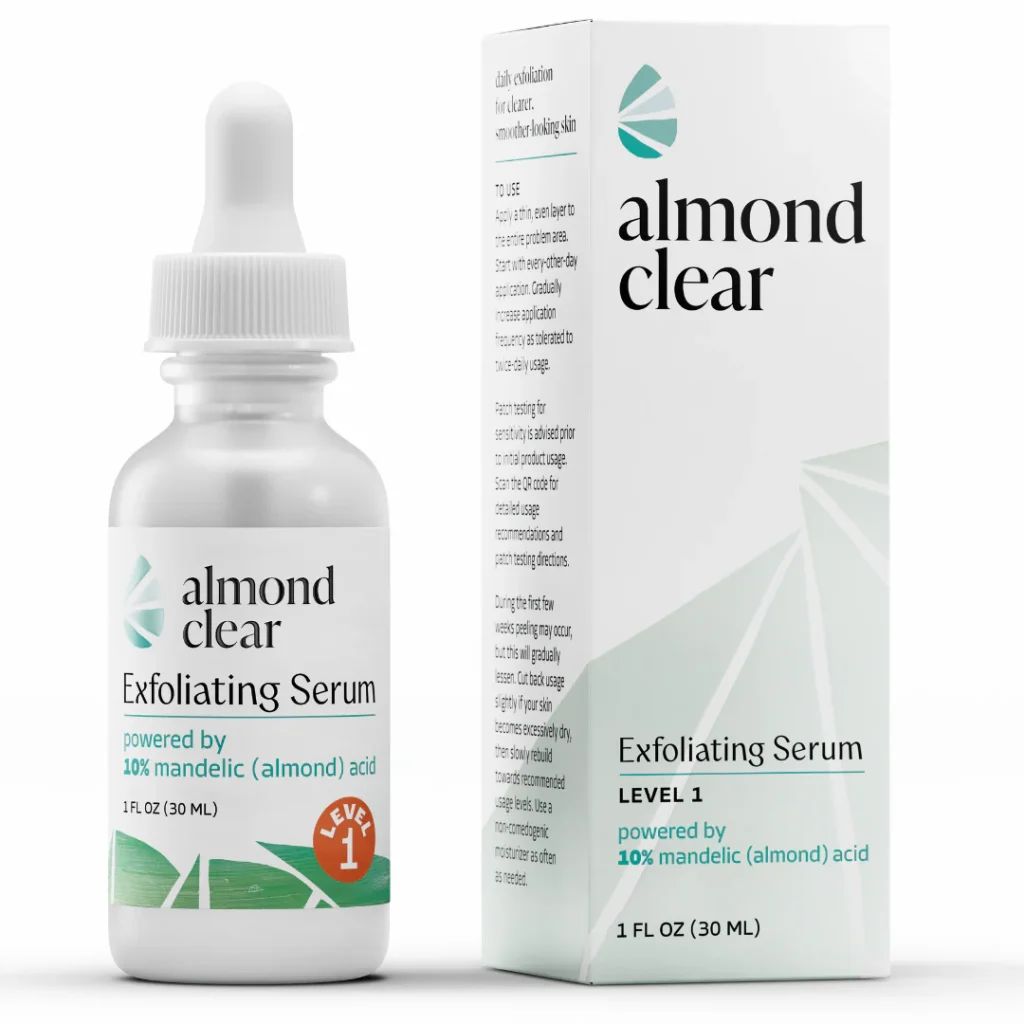
Once she discovered mandelic acid on TikTok Shop and watched it work on her bikini area, she remembered her aesthetician’s recommendation and looked for a face-safe version.
She found the Almond Clear Level 1, which contains 10% mandelic acid, and importantly, is formulated specifically for facial use.
She has been using it on and off since April, and the results she describes are exactly what the science would predict: gradual, even clearing that has continued to improve the longer she stays consistent.
“I’ve been using this on my face on and off consistently. I use it twice a week for a week, I’m off the next week and then I do it again. And I’ve been doing that since April.”
As of 9th JULY
For the Face · Jaw Hyperpigmentation
Almond Clear Level 1
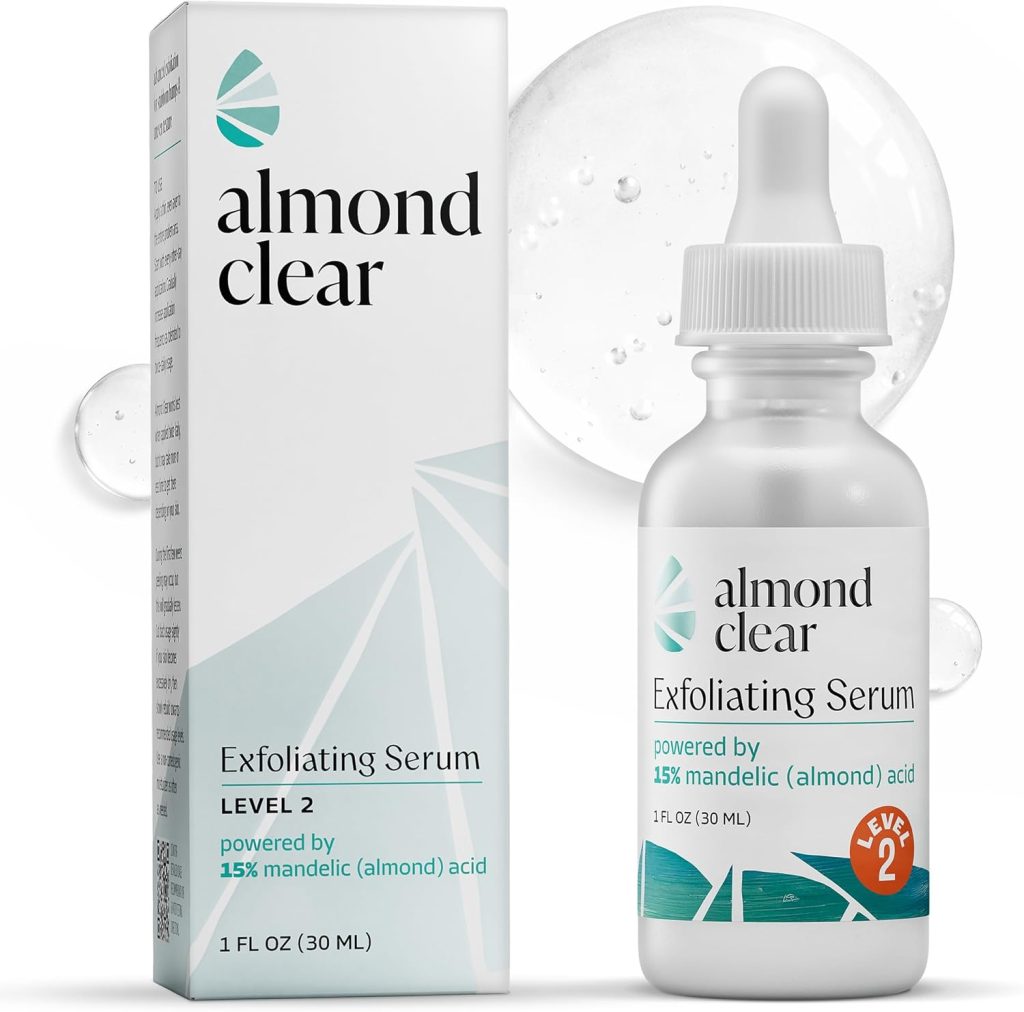
2. The Body Formula (15% Mandelic Acid)
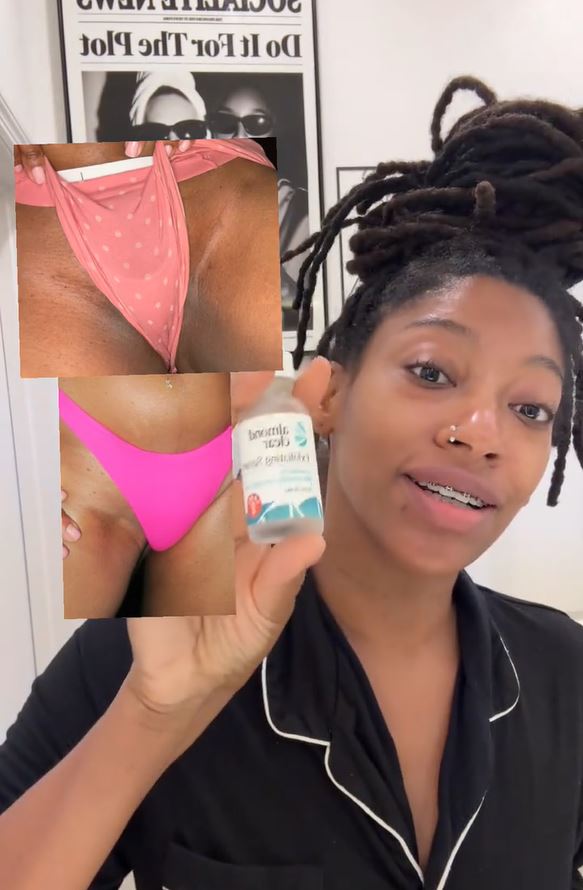
She found this on TikTok Shop after watching someone use it on their bikini area, and the results made her a believer.
The Level 2 contains 15% mandelic acid (a concentration she flags as notably high. “15% mandelic acid is very highly concentrated) but it worked really well on my bikini area.”
She also used the every-other-week approach here, and emphasises that patience and the cycling routine are what make the difference.
She has since expanded her mandelic acid use to include mandelic acid bar soaps and body washes by Lume. “I’m to the point where everything gotta have mandelic acid in it.“
For the Body · Bikini Line & Underarms
Almond Clear Level 2
How to Use It; Her Exact Routine
Make sure your skin barrier is intact before you introduce mandelic acid.
⚠️ Before Anything Else — Read This
“Extra, extra, extra, extra pay attention to your skin barrier — get that together for a good week first.”
A compromised skin barrier and an exfoliating acid is a recipe for irritation. Repair and hydrate your barrier for at least a week before you begin.
STEP BY STEP
Her Mandelic Acid Routine
Week 1: Repair your skin barrier first. Hydrate, moisturise, no actives. Give your skin a full week to be in good shape before you introduce anything new.
Weeks 2–3: Start every other day. Apply the mandelic acid every other day for two weeks. Do not go daily, do not rush. “These are exfoliating acids, you gotta be careful.”
Weeks 4+: Move to her sustainable cycle. Twice a week (e.g. Monday and Wednesday) one week, then skip the following week entirely. Repeat.
“I use it twice a week, every other week; so if I use it on Monday, I use it on Wednesday and then I’ll skip next week.”
Throughout: Take before pictures. She cannot stress this enough. “We have a habit of feeling so embarrassed by our before pictures; take before pictures.” Her tip: photograph in black and white, because in black and white you can clearly see where skin is darker. After about 20 days, take the same picture again in the same lighting. That is where you will see the proof.
Give it time: “This is not a product to try for 14 days and be like, I don’t see nothing.” She started in April. She is still using it. The changes are gradual, real, and cumulative. “You gotta give it 21 days; minimum.”
You May Also Like: These Are the 2 Reasons Why You’re Not Getting That Glassy Skin—And How to Fix It
While mandelic acid is backed by promising science, every case of hyperpigmentation is different.
If your pigmentation is deep, persistent, or you’re new to active ingredients, consult a licensed aesthetician or dermatologist experienced with melanated skin.
They can assess your skin barrier, recommend the right strength, and help you avoid treatments that could worsen pigmentation.
Sometimes, the best results start with honest, expert advice.
Sent! Check your inbox.